Water-line excavation
Prepare a controlled trench route for new construction, replacement lines, property expansions, farm systems, and other approved water-service projects.
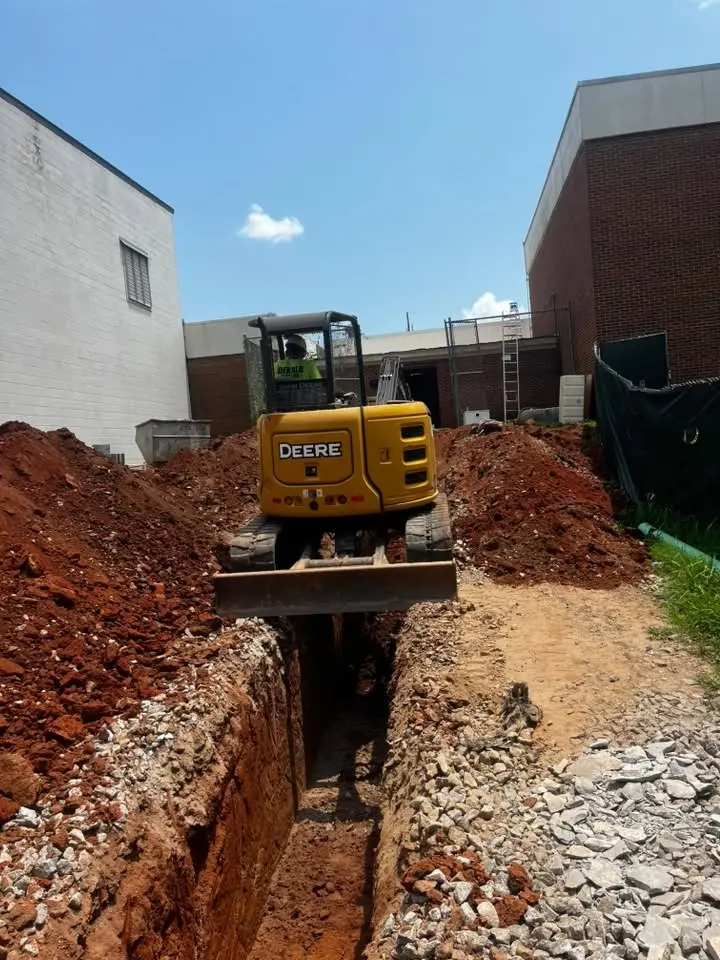
Underground work planned before the surface is finished
Precise trench excavation and underground pipe preparation for water, sewer, drainage, conduit, sleeves, repairs, relocations, and new construction throughout Northeast Georgia.
Done from the ground up
Underground utilities must arrive at the right place, at the right depth or slope, with stable support and enough protection for the surface above. TerraCraft evaluates the route, soil, drainage, existing improvements, crossings, and restoration needs before excavation begins.
Utility excavation is more precise than general earthmoving. It requires close attention to marked lines, trench conditions, bedding, separation, inspection timing, backfill, compaction, and final grade.
Discuss your utility project →Coordinated underground sitework
Prepare a controlled trench route for new construction, replacement lines, property expansions, farm systems, and other approved water-service projects.
Establish trench access, depth, bedding, and consistent grade around the approved pipe plan and connection points.
Excavate and prepare routes that move roof, yard, parking, or site runoff toward an appropriate approved outlet.
Install or prepare underground drainage routes as one part of a broader property water-management plan.
Create organized underground routes for approved electrical, communication, or low-voltage conduit in coordination with the appropriate trade.
Place planned sleeves beneath future driveways, building approaches, or other finished surfaces before access becomes difficult.
Expose, remove, reroute, or prepare replacement trenches for approved private utility changes when site conditions allow.
Provide careful access to damaged private lines and restore the excavation after the responsible trade completes required repair work.
Coordinate excavation and sitework around the supplied route, plans, permits, inspections, and authorized connection point.
Plan utility corridors alongside clearing, house pads, driveways, drainage, and final grading for new construction.
The final scope depends on project plans, permits, inspections, utility ownership, and licensing requirements. Regulated plumbing, electrical, public-main connections, testing, or design work may require the appropriate utility provider or licensed trade.
Plan routes before construction closes in
New homes, barndominiums, garages, workshops, guest houses, farms, property improvements, and commercial sites all benefit from coordinating utilities with access, foundations, drainage, and final elevations.
Precision in every part of the trench
Match approved plans, pipe or conduit requirements, crossings, soil, working clearance, and local rules.
Create uniform support beneath and around the utility rather than allowing it to rest on rocks, voids, or uneven soil.
Protect the line, control settlement, and restore strength beneath driveways, yards, and future finished surfaces.
Maintain required spacing between water, sewer, electric, communications, gas, and other systems according to the approved plan.
Use public and private locating information, careful exposure, and an adjusted work method around known lines.
Prepare and maintain a consistent trench grade where a sewer or drainage system depends on gravity flow.
Water, sewer, stormwater, conduit, and sleeves
Water lines need suitable cover and protection. Gravity sewer lines depend on reliable slope. Storm and drainage pipe must connect the source of water to a stable outlet. Conduit and sleeves should anticipate future buildings, driveways, and access needs.
These systems should be planned as part of the overall site—not as isolated trenches. Related site preparation, building pads, driveways, and final grading all affect utility routes.
Plan the Route Early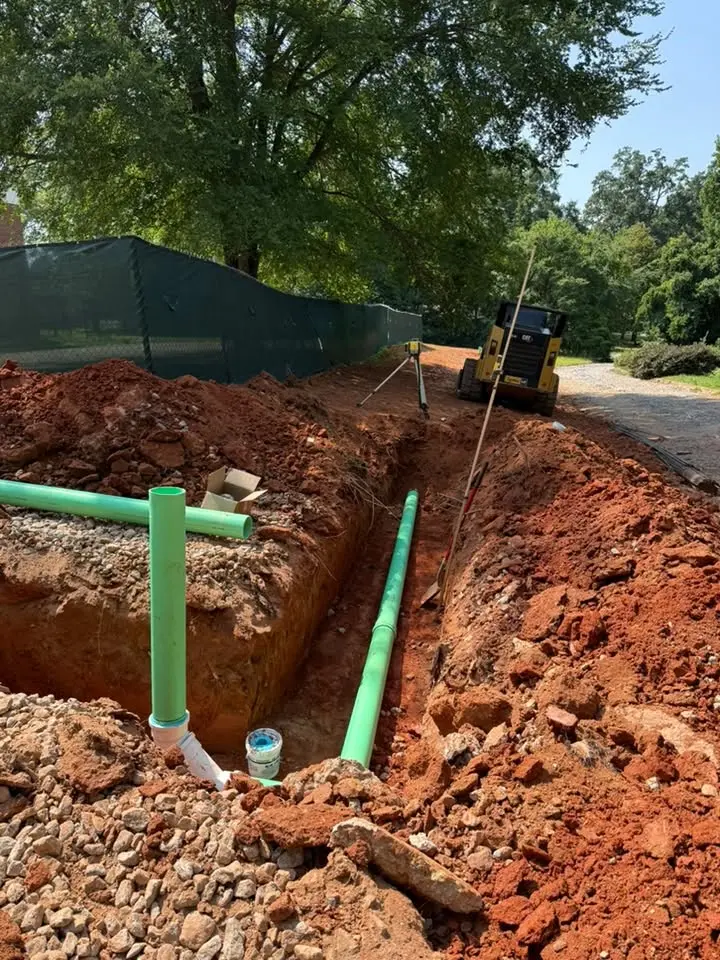
From locating to restoration
Review the route, structures, slopes, access, soil, drainage, future surfaces, and known connection points.
Public utilities must be located through 811, while the owner identifies private lines, septic components, wells, irrigation, and other hidden systems.
Coordinate the approved route, utility separation, crossings, depth, slope, access, spoil placement, and restoration plan.
Open the trench with equipment matched to the property while protecting marked utilities and surrounding improvements.
Shape the bottom, remove unsuitable material, and prepare stable bedding according to the pipe, plans, soil, and project requirements.
Install the approved material when included in TerraCraft's scope, or prepare safe access for the responsible licensed trade.
Support the pipe zone and haunches with suitable material so the line can maintain alignment, grade, and protection.
Pause for any required inspection, testing, trade approval, or owner verification before the work is covered.
Place suitable material around and above the utility without damaging or shifting the installed line.
Compact in controlled layers where appropriate, especially beneath driveways, yards, building approaches, and future hard surfaces.
Complete final grading, remove excess material as agreed, and leave the route ready for its next planned surface or landscaping phase.
Tell us what you are building, where the line needs to run, and what type of utility is involved. TerraCraft will review the project and explain the next step.
Request a Site EvaluationSupport below and around the pipe matters
Bedding creates continuous support, fills the lower side or haunch area, helps the line maintain grade and alignment, and reduces pipe movement or concentrated loading.
Stable support helps keep the utility from shifting as backfill is placed and the ground settles.
Gravity sewer and drainage systems depend on a prepared trench bottom and consistent pipe support.
Removing rocks, voids, unsuitable soil, and point loads protects the installed pipe.
The underground work becomes difficult and expensive to correct after driveways, yards, and buildings are finished.
Actual trench dimensions and materials depend on the utility, approved plans, soil, pipe specifications, inspections, and local requirements.
Use the right method for the route
Provides direct access to prepare bedding, observe pipe placement, complete connections, and compact backfill. It is often practical where the surface can be disturbed and restored.
May reduce surface disturbance beneath roads, mature landscaping, structures, or other obstacles. It requires specialized equipment and may be completed by a separate qualified contractor.
Every underground route is different
Real TerraCraft underground sitework
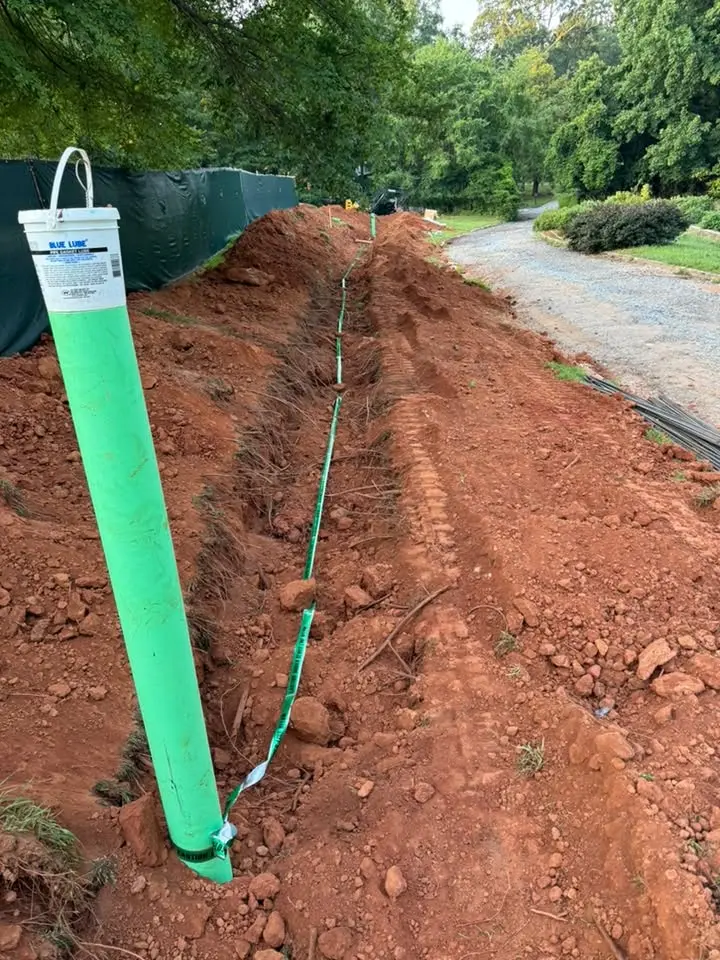
Serving Athens–Clarke County, Oconee, Jackson, Barrow, Madison, Oglethorpe, Banks, Walton, Franklin, Hall, Elbert, Hart, and surrounding Northeast Georgia communities.
Precision where it matters
Marked lines, private systems, crossings, structures, and protected areas are included in the work plan.
Trench bottom, bedding, pipe zone, backfill, and compaction receive attention—not only the digging.
Equipment is matched to depth, access, soil, route length, and the space available on the property.
Final grade connects the restored route with drainage, driveways, yards, pads, and surrounding terrain.
TerraCraft identifies what is included, what information is still needed, and when another trade or inspection is required.
Excavation is sequenced around materials, connection points, inspection timing, builders, and utility professionals.
Northeast Georgia clay, slopes, wooded lots, runoff, tight access, and wet ground affect the approach.
Related clearing, excavation, pads, driveways, drainage, grading, and restoration can be coordinated as one project.
Answers before the trench opens
Approved plans, utility ownership, permits, inspections, existing systems, soil, and the responsible licensed trade determine the final scope.
Required depth depends on the approved plans, pipe, frost protection, road crossings, local rules, and site conditions. TerraCraft follows the project requirements rather than using one depth everywhere.
Depth is controlled by building elevation, connection point, required slope, crossings, cover, and approved plans. Gravity sewer work must maintain consistent grade.
A short accessible run may take a day or several days. Length, depth, soil, rock, weather, inspections, crossings, materials, and restoration affect the schedule.
Possibly. Requirements vary by utility, property, county, municipality, road right-of-way, and connection type. The owner and applicable trade should confirm approvals before work begins.
TerraCraft can coordinate utility excavation with site preparation, a house pad, driveway, drainage, and final grading. The exact installation and connection scope depends on plans and trade requirements.
Public utilities should be marked through Georgia 811 before excavation. The property owner must identify private utilities and systems that 811 does not locate.
No. Private water, sewer, septic, irrigation, propane, electric, communication, invisible fencing, and other owner-installed systems may require separate locating.
TerraCraft can excavate and may place approved conduit or sleeves when included in the scope, while electrical design, wiring, energization, and regulated connections remain with the appropriate licensed professional.
Yes, when planned correctly. Depth, sleeve or conduit, bedding, compaction, load protection, separation, and future access should be addressed before the driveway is finished.
Bedding supports the pipe, fills voids around the lower sides, helps maintain slope and alignment, and reduces movement or point loading.
Restoration may include controlled backfill, compaction, final grading, excess-material handling, aggregate replacement, and preparation for landscaping or another contractor.
TerraCraft can evaluate excavation access and restoration. The actual repair may require a licensed plumber, electrician, utility provider, or other qualified trade.
Potentially, after the current line is located and the new route, permits, ownership, trade responsibilities, and connection requirements are confirmed.
Yes, when underground pipe is appropriate. Surface grading, swales, outlets, soil, and the full runoff path should also be evaluated.
Length, depth, soil, rock, access, existing utilities, pipe or conduit, bedding, inspections, crossings, spoil handling, backfill, compaction, and restoration all affect cost.
Plan underground utilities before the surface is finished
Share the utility type, route, approximate length, property location, project stage, known connection points, and any plans or photos available.
706-480-8220Serving Athens–Clarke County, Oconee, Jackson, Barrow, Madison, Oglethorpe, Banks, Walton, Franklin, Hall, Elbert, Hart, and surrounding Northeast Georgia communities.