Gravel driveways
Practical, repairable access for homes, rural properties, farms, workshops, barns, rentals, and new construction.
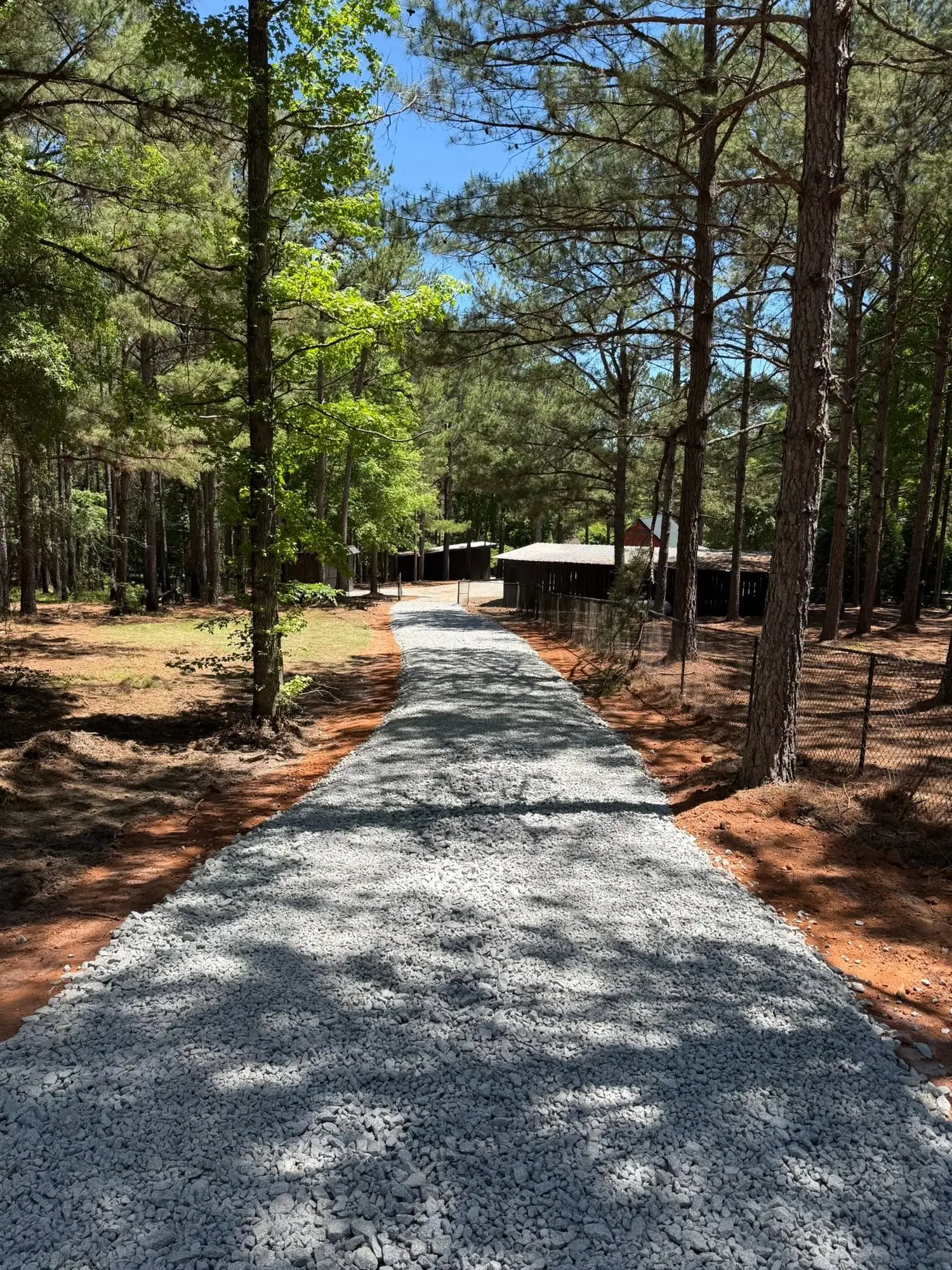
A durable driveway starts below the surface
Properly built gravel driveways for homes, farms, rural properties, private roads, and construction sites throughout Northeast Georgia.
More than spreading gravel
A good driveway should support regular traffic, shed water correctly, remain stable during wet weather, and hold its shape with reasonable maintenance. The stone on top is only one part of the driveway—what happens underneath matters even more.
TerraCraft evaluates vehicle use, water movement, soil, slope, and safe runoff outlets before recommending excavation, grading, base material, drainage, culverts, and the finished surface.
Discuss your driveway project →Built around the property and its traffic
Practical, repairable access for homes, rural properties, farms, workshops, barns, rentals, and new construction.
Angular aggregate selected around soil, slope, traffic, drainage, appearance, and local material availability.
Route, width, curves, shoulders, cross-drainage, ditches, culverts, turnouts, and turnaround areas planned together.
Stronger road systems for multiple homes, family land, rental units, agricultural areas, and large tracts.
Safe access that does not direct water toward the home, garage, foundation, or neighboring property.
Entrances and driving surfaces designed around tractors, trucks, trailers, deliveries, and seasonal heavy traffic.
Temporary or permanent access to wooded acreage, ponds, utilities, building sites, barns, and remote work areas.
Stable access for concrete trucks, dump trucks, equipment, materials, builders, and utility contractors.
Fix the cause, not only the surface
Not every damaged driveway needs a complete rebuild. The right repair depends on why it is failing. Simply adding gravel may hide soft soil, trapped water, poor slope, or an unstable base for only a short time.
Correct the water path, reshape the driveway, improve ditches or culverts, stabilize the outlet, and replace lost material.
Reshape and compact surface damage or excavate recurring weak areas when the problem is below the surface.
Open the damaged area, correct the low spot, add suitable aggregate, compact it, and restore surface drainage.
Remove unstable soil where needed, address moisture, and rebuild with a stronger base instead of burying mud under more stone.
Restore crown or cross-slope, move displaced material back into the travel lane, and give water a usable exit.
Add the right aggregate after the existing driveway has been properly reshaped and its drainage problems corrected.
Repair or reconstruction?
Repair may be enough when the base is stable and damage is limited to the surface. Partial or complete reconstruction may be smarter when stone disappears into mud, deep ruts quickly return, water has no outlet, the driveway was built over topsoil or organic material, or heavy vehicles need stronger access.
The goal is to avoid paying repeatedly for temporary fixes when the real problem is underneath.
Request a Driveway Review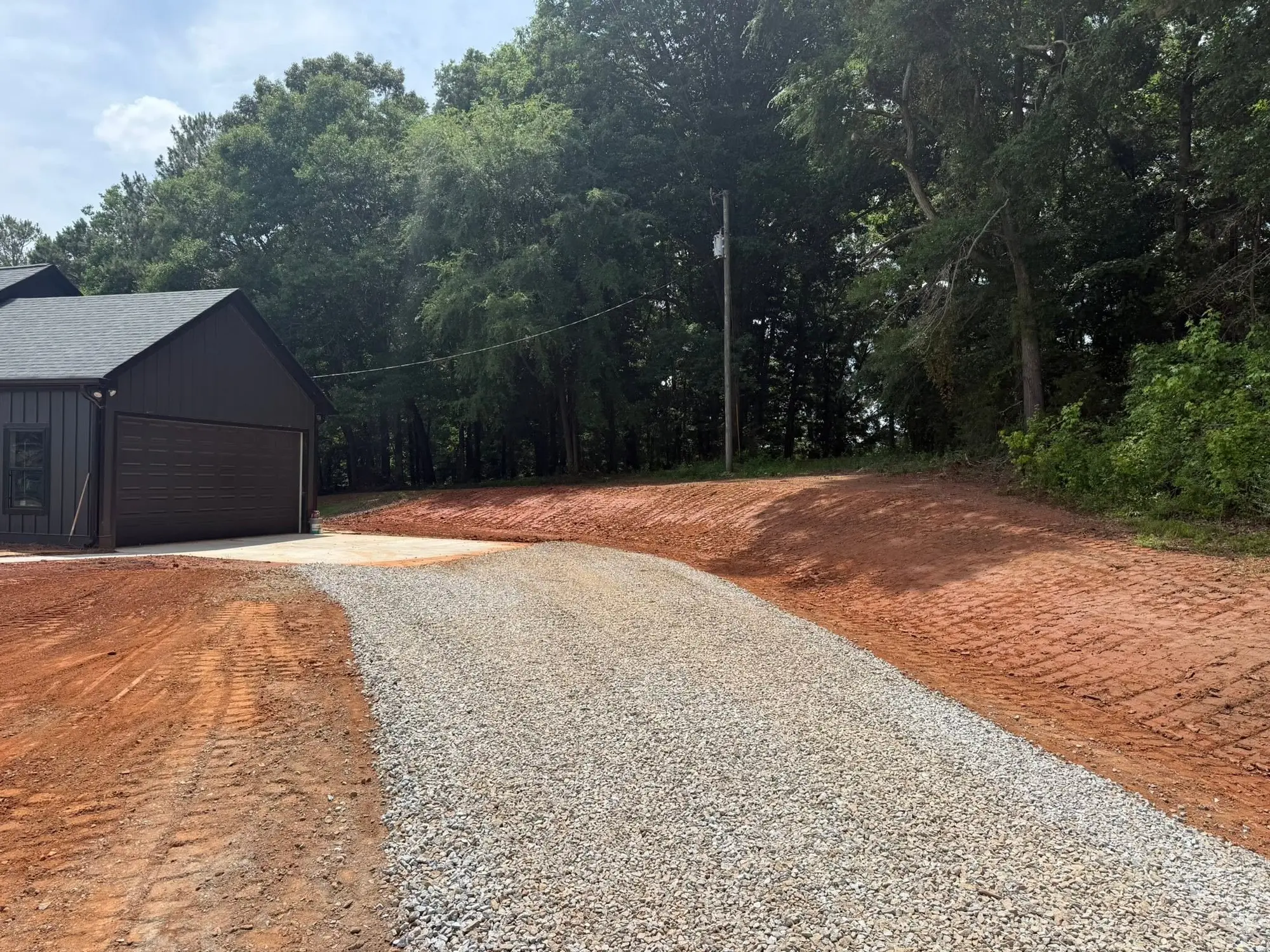
The base carries the load
Remove topsoil, vegetation, roots, soft material, and unsuitable soil; establish elevation and prepare a stable roadbed.
Select base material for the soil and traffic, place it in manageable lifts, and compact it instead of relying on vehicles to settle a deep loose layer.
Shape the surface so water leaves the travel lane without concentrating enough flow to erode it.
Collect water beside the driveway and carry it toward a stable, appropriate outlet.
Move roadside or natural drainage beneath the driveway with the right pipe elevation, slope, bedding, and protected inlet and outlet.
Protect shoulders, slopes, yards, creek banks, and drainage outlets from concentrated runoff and sediment movement.
Water is one of the biggest causes of driveway damage. For a broader site issue, TerraCraft can coordinate related grading, excavation, and site preparation.
Recognize what the driveway is telling you
From route planning to final walkthrough
Review soil, access, terrain, slopes, drainage, vegetation, road connection, intended traffic, structures, and water outlets.
Plan route, width, curves, parking, turnaround, and connections to the house pad, garage, utilities, septic, and future buildings.
Remove vegetation, topsoil, roots, and unsuitable material as needed to create a stable roadbed.
Establish the route, elevation, crown or cross-slope, shoulders, and room for drainage features.
Install required ditches, swales, cross-drains, and culverts before finished stone is placed.
Place suitable aggregate over the prepared roadbed at a depth appropriate for the site and intended traffic.
Compact the base in manageable lifts to improve stability and reduce settlement.
Spread and shape the selected finished material to the intended crown or cross-slope.
Check transitions, shoulders, ditches, culvert flow, low areas, road connection, and drainage outlets.
Review the completed driveway, explain how water should move, and discuss practical maintenance.
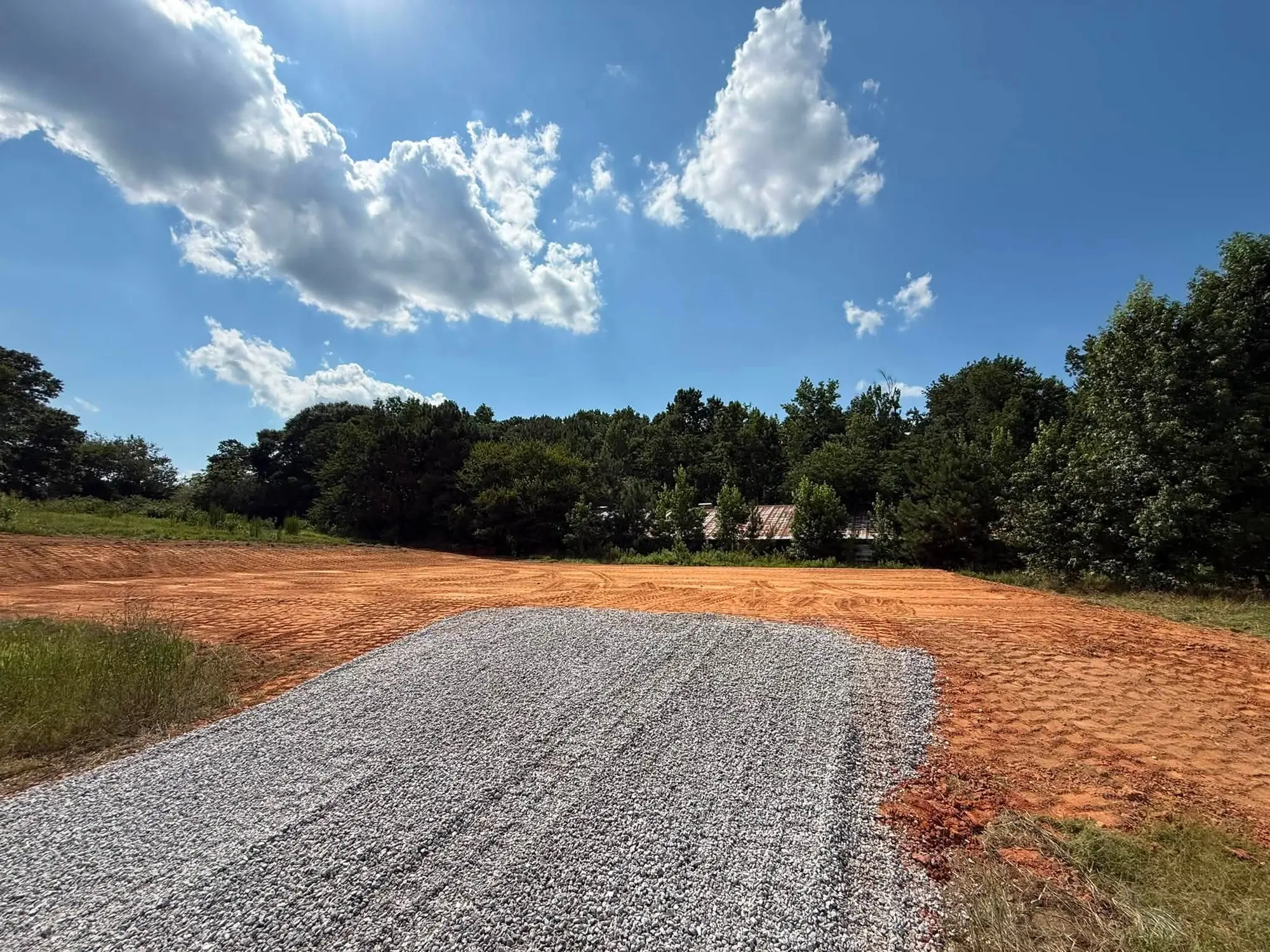
Real TerraCraft driveway work
Local driveway and sitework experience
TerraCraft installs and repairs driveways in Athens–Clarke County and around Watkinsville and Oconee County, including residential entrances, estate access, construction driveways, and long roads serving larger lots.
We also serve Jefferson, Commerce, Winder, Monroe, Lexington, Danielsville, Royston, Hartwell, Elberton, Gainesville, and surrounding communities across Northeast Georgia.
Every property is evaluated individually because soil, slope, drainage, traffic, road access, and materials can change significantly from one site to another.
Serving Athens–Clarke County, Oconee, Jackson, Barrow, Madison, Oglethorpe, Banks, Walton, Franklin, Hall, Elbert, Hart, and surrounding Northeast Georgia communities.
Complete sitework capability
We look below the finished surface and explain when weak ground needs excavation or correction.
The driveway is shaped to support traffic and move water toward controlled drainage areas.
We evaluate where water enters, crosses, follows, and exits the driveway.
Aggregate is selected around how the driveway will be used, not appearance alone.
Capable equipment helps us excavate, spread, grade, compact, and finish efficiently.
Northeast Georgia clay, rolling terrain, wooded acreage, steep entrances, roadside ditches, and storm runoff influence the plan.
Straight answers before work begins
The property, soil, slope, drainage, traffic, and intended use determine the right recommendation.
Cost depends on length, width, excavation, base depth, aggregate, drainage, culverts, access, and delivery distance. TerraCraft provides a project-specific estimate after reviewing the property.
A properly constructed gravel driveway can remain useful for many years with periodic maintenance. Drainage, base preparation, traffic, slope, soil, materials, and maintenance all affect service life.
There is no single best material for every property. Base and surface aggregate should be selected around soil, slope, drainage, traffic, and local availability.
Many single-lane residential driveways are about 10 to 12 feet wide, but curves, shoulders, terrain, emergency access, trailers, and local requirements can require more width.
There is no universal depth. Weak soil and heavy traffic typically require more preparation and aggregate than firm ground used by passenger vehicles.
A culvert may be needed where a roadside ditch or natural drainage path crosses the entrance, or where water must cross beneath a long driveway.
Yes. TerraCraft evaluates washouts, potholes, ruts, soft areas, standing water, poor grading, damaged culverts, and material loss before recommending repair or reconstruction.
Yes, but the cause should be identified first. Work may include drainage correction, unstable-soil removal, new base material, geotextile separation, compaction, or a combination.
Recurring potholes usually mean water collects in the same location. The surrounding grade and drainage path must be corrected, not just the hole filled.
Yes. The route may require land clearing, forestry mulching, stump removal, excavation, grading, drainage, and base installation.
Yes. Widening, parking pads, pull-offs, and turnarounds require the same attention to excavation, base preparation, drainage, and compaction.
TerraCraft focuses on excavation, grading, drainage, base preparation, and aggregate driveways. We can prepare a roadbed for a paving contractor when appropriate.
Some do, especially new entrances and work in a public right-of-way. Requirements depend on the county, municipality, road ownership, and drainage scope.
Work can be completed through much of the year, but extremely wet ground can affect excavation, hauling, grading, and compaction.
A durable driveway starts with the right plan
Tell us whether you need a new gravel driveway, long rural road, construction entrance, drainage correction, or repair to an existing driveway.
706-480-8220Serving Athens–Clarke County, Oconee, Jackson, Barrow, Madison, Oglethorpe, Banks, Walton, Franklin, Hall, Elbert, Hart, and surrounding Northeast Georgia communities.